




A guest sees your rooms on Instagram, clicks through to your website and likes what they see. They tap Book. A new page opens with a different font, a different logo and a calendar that doesn’t fit their phone. They go back to Google, find you on Booking.com, and book there instead.
You still get the guest, but you pay commission on the room, you lose their email address, and the next time they want a night away they will start on the OTA again. For most hotels, pubs with rooms and restaurant groups, that is the biggest leak in the business, and it sits between the website and the booking engine.
Every hand-off is a chance to lose the booking
OTA commission on a room night is commonly 15 to 25 per cent. On a busy weekend that is a lot of money paid for a guest who had already found you. The usual cause is not the booking engine itself. It is the join between the engine and the website: a link out to a separate page, a widget that looks nothing like the brand, tracking that stops at the hand-off so nobody knows where the booking was lost, and too many taps on mobile.
Owning the booking journey means treating that join as part of the website, not as somebody else’s problem.
Integrate the engine, don’t just link to it
We work with the booking platforms most used across UK hospitality. For tables, that means ResDiary, OpenTable, SevenRooms, DesignMyNight (Collins) and Resy. For rooms, it means hotel booking engines and systems such as Mews, Guestline, Cloudbeds, SiteMinder, eviivo and P3. Every engine has its own limits, so the right method depends on what it allows and what you need to measure.
- Embedded widgets. The engine sits inside your page, styled to match the brand, so the guest never feels they have left.
- API-led journeys. Where the engine allows it, we build the search and availability steps ourselves and hand over to the engine only for payment.
- A Book button on every page. Persistent, thumb-friendly on mobile, and taking the guest to the right venue, room type or table.
- Tracking across the hand-off. Cross-domain analytics and booking events in GA4 and Looker Studio, so you can see where guests drop out and which pages, offers and channels lead to bookings.
Daylesford Stays: one booking journey across the collection
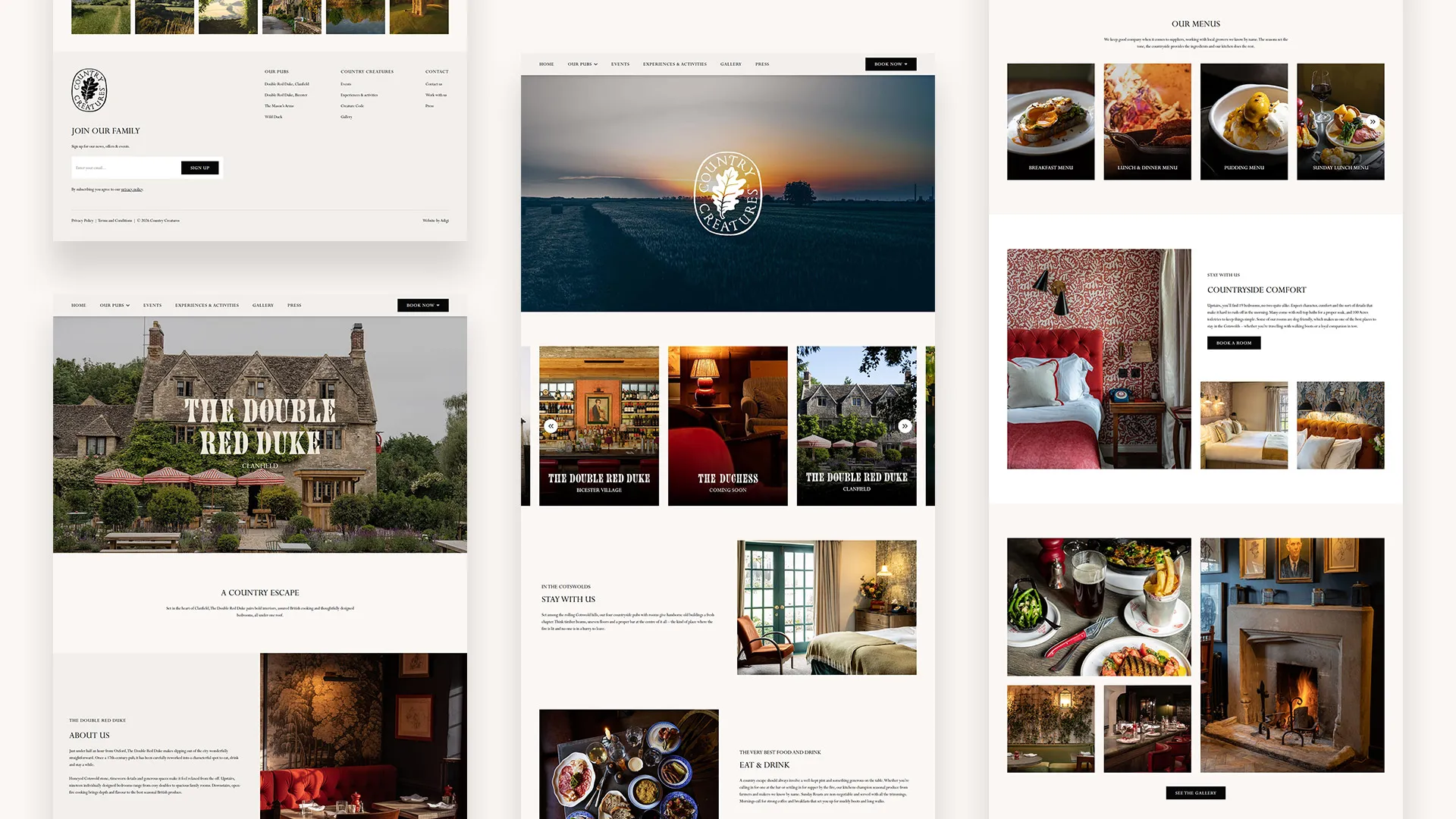
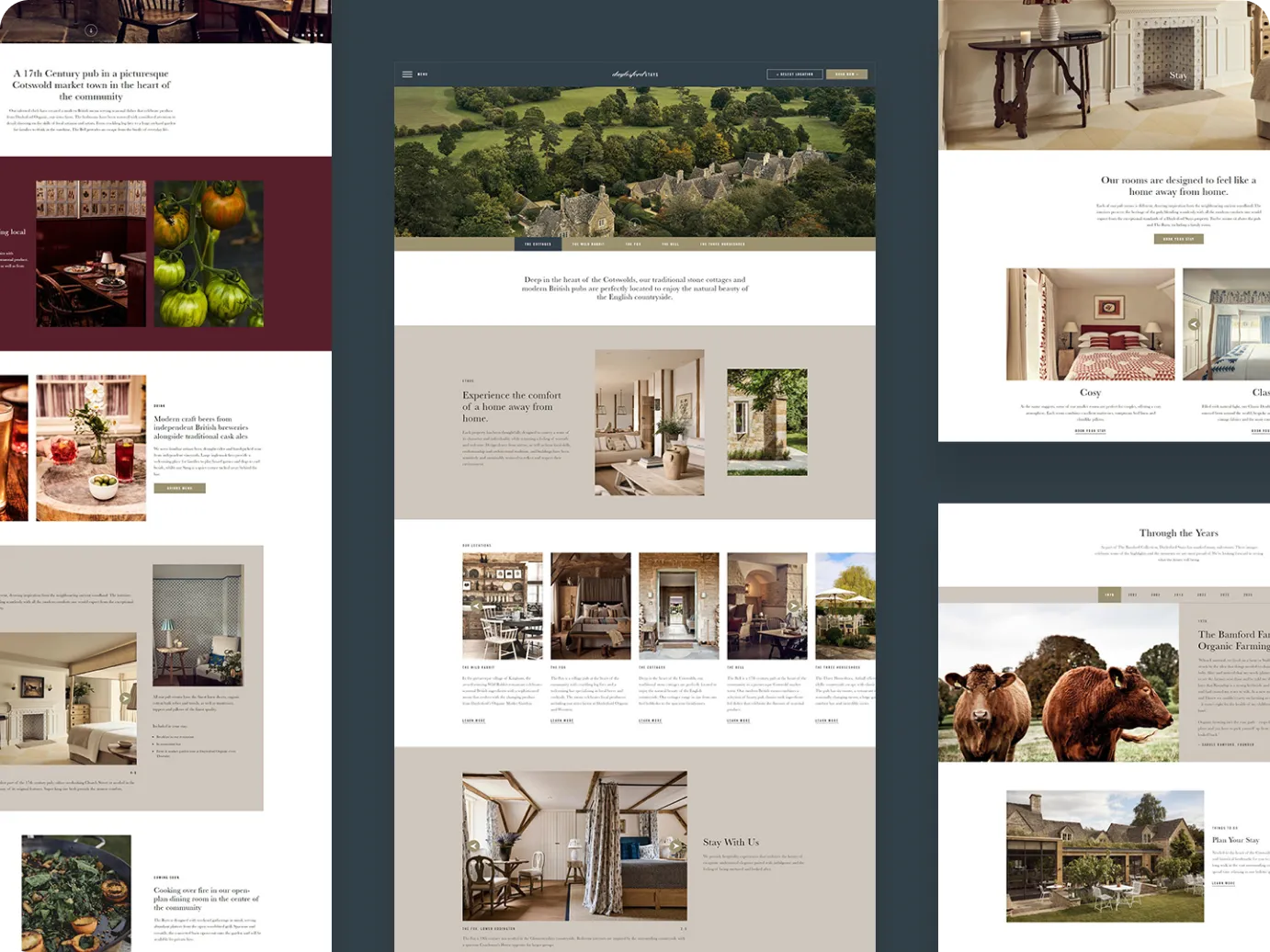
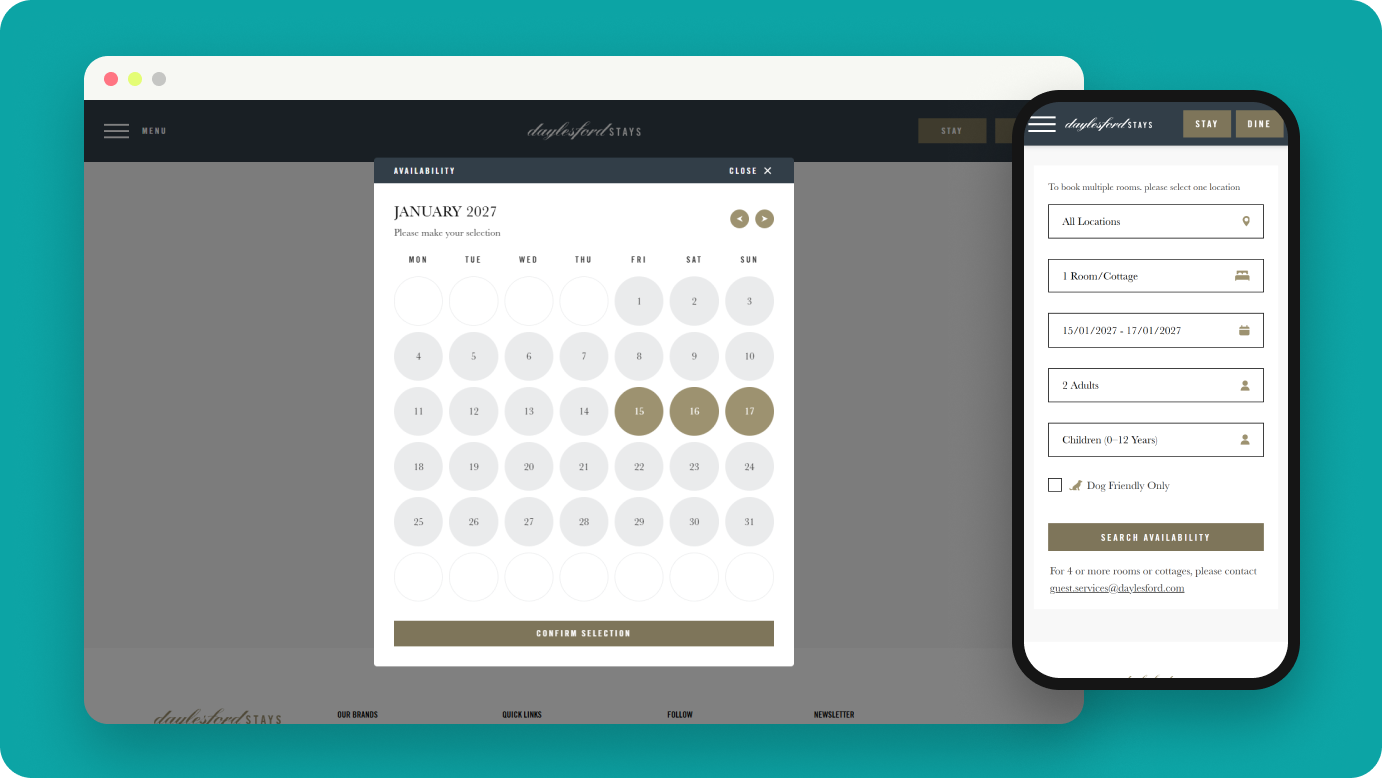
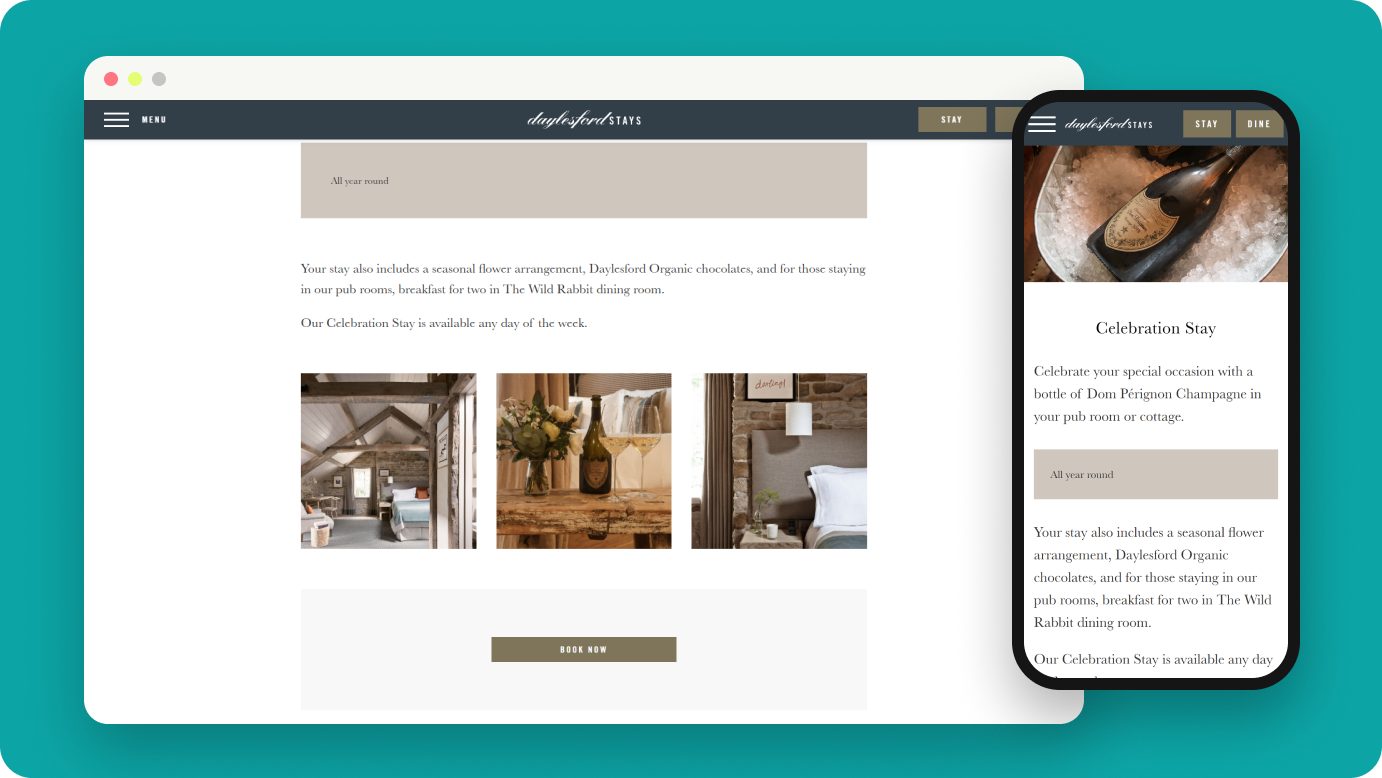
Daylesford Stays brings together the Daylesford cottages and the Cotswolds pub rooms, each with its own character. Guests used to book each place separately. We moved the whole collection onto a single Daylesford Stays booking widget built on the P3 booking framework, so a guest can search every venue in one place, and we put a Book now button on every page of the site.
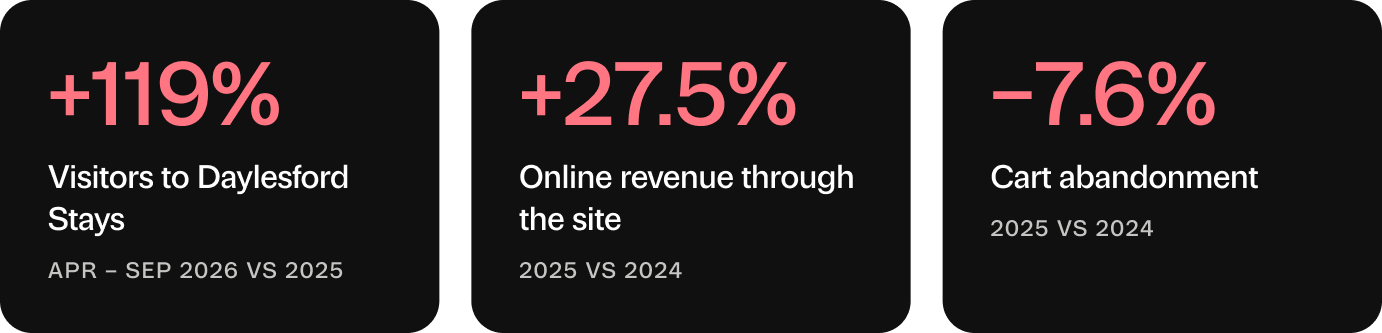
Comparing 2025 with 2024, online revenue through the site rose 27.5 per cent and average purchase revenue rose 23.6 per cent, while cart abandonment fell 7.6 per cent (7.1 per cent on mobile, 8.3 per cent on desktop). This year the site has kept growing: visitors to Daylesford Stays are up 119 per cent between April and September compared with the same months last year.
The next phase is a live availability calendar. If a guest’s first choice of date or cottage is full, the calendar shows the next best dates and the other venues that are free, so the booking moves to another Daylesford stay instead of to another website.
Cubitt House: making the table booking the easy bit
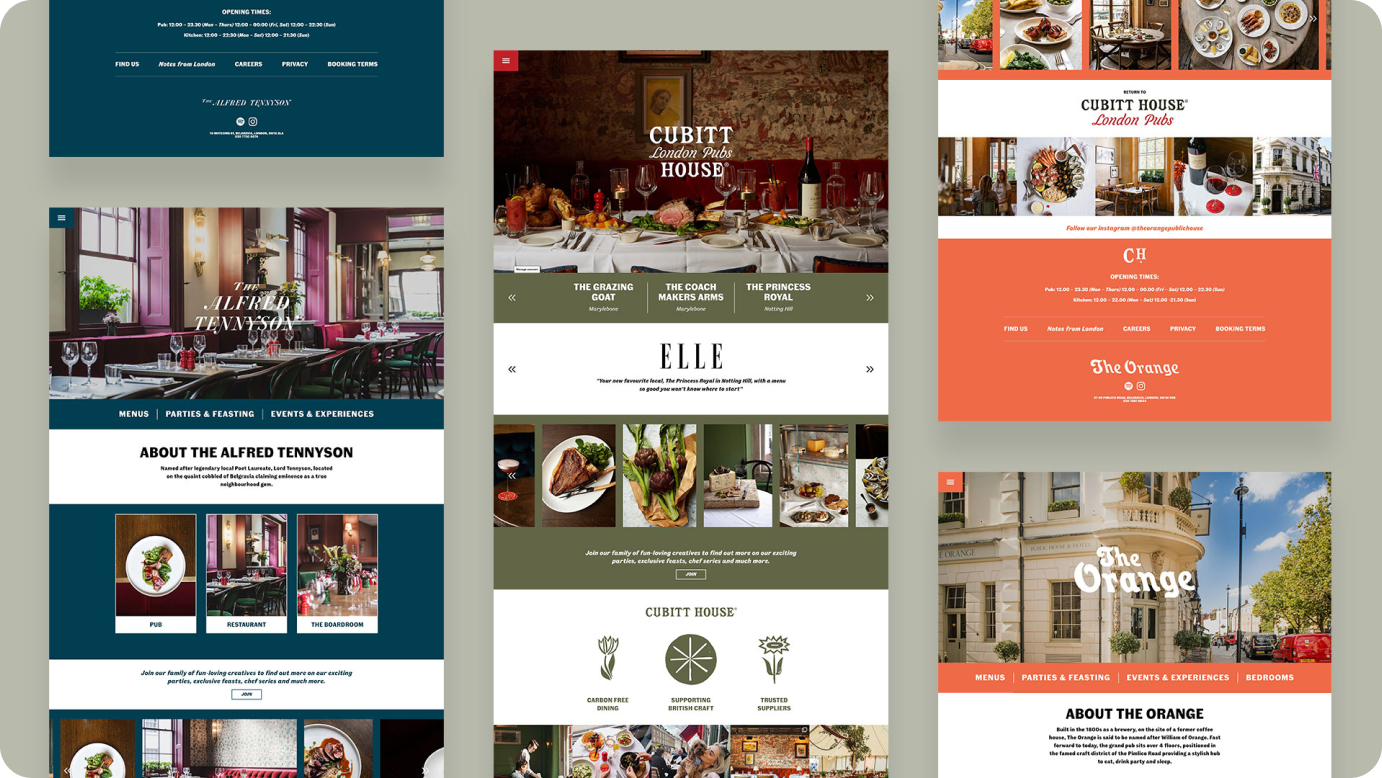
Cubitt House runs eight very different London pubs with one busy team. The website leads with the group name, gives each pub its own pages and colours, and puts the table booking within one tap of every pub page. After the new site launched, the booking goal conversion rate rose to 15 per cent.
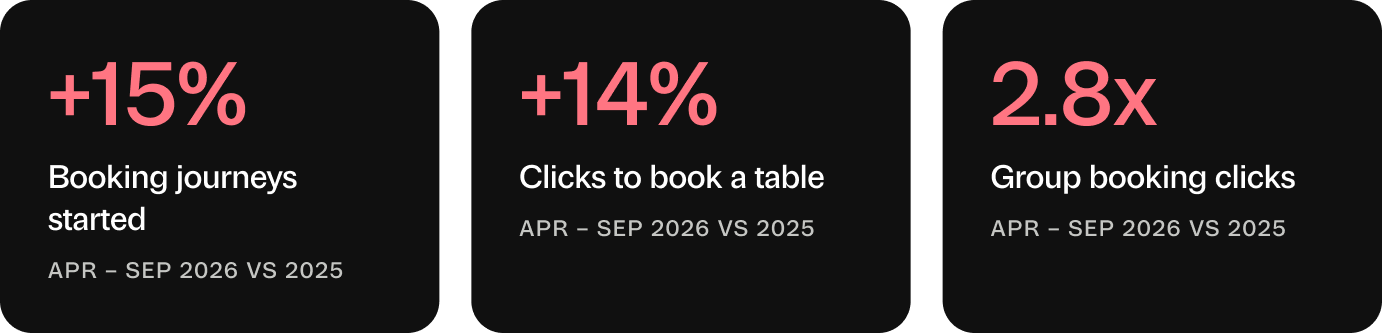
We have kept improving it since. Between April and September 2026, compared with the same months in 2025, booking journeys started rose 15 per cent, clicks to book a table rose 14 per cent, and group booking clicks were 2.8 times higher.
The Cubitt House team said: “The team at Adigi are an absolute pleasure to work with… they certainly do know the hospitality industry and add great value to our business as we grow.”
The Lime Tree: small changes, kept up
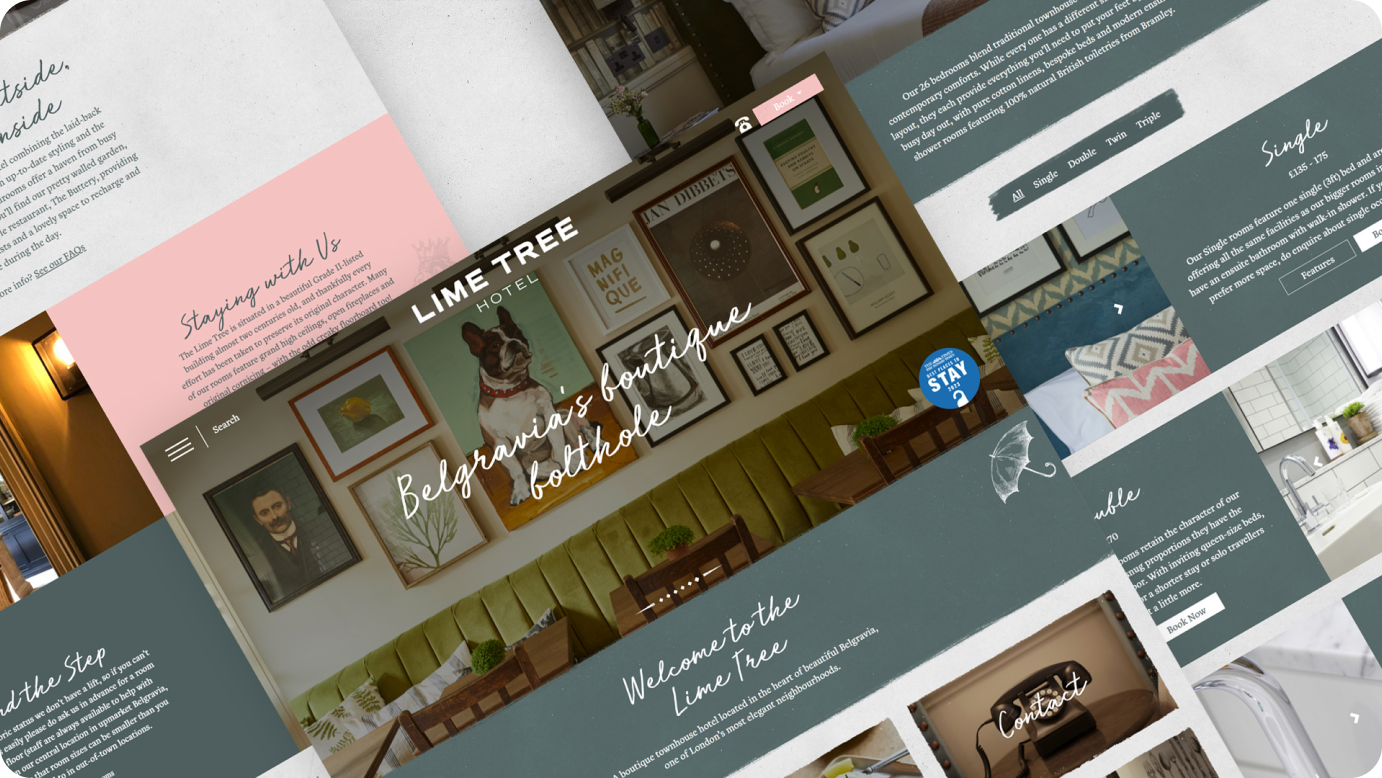
At The Lime Tree we focused on the room pages and the route from a room to the booking engine, then kept testing and adjusting after launch. Through that continuous conversion work the hotel reached 90 per cent occupancy. Goal completions rose 210 per cent in the two years after launch, and a further 16 per cent the year after.
Give guests a reason to book direct
A good integration removes the reasons to leave. Packages and direct-only offers give guests a reason to stay. Build them into the website and the booking engine together, so the guest can choose and pay in one journey:
- Dinner, bed and breakfast, spa and seasonal packages that can only be booked on your site.
- Small direct-booking benefits such as a late checkout, a drink on arrival or flexible cancellation, stated clearly next to the Book button.
- Events, experiences and private dining booked in the same journey as the room or the table.
- Gift vouchers that bring new guests to your own website first.
The booking is the start, not the end
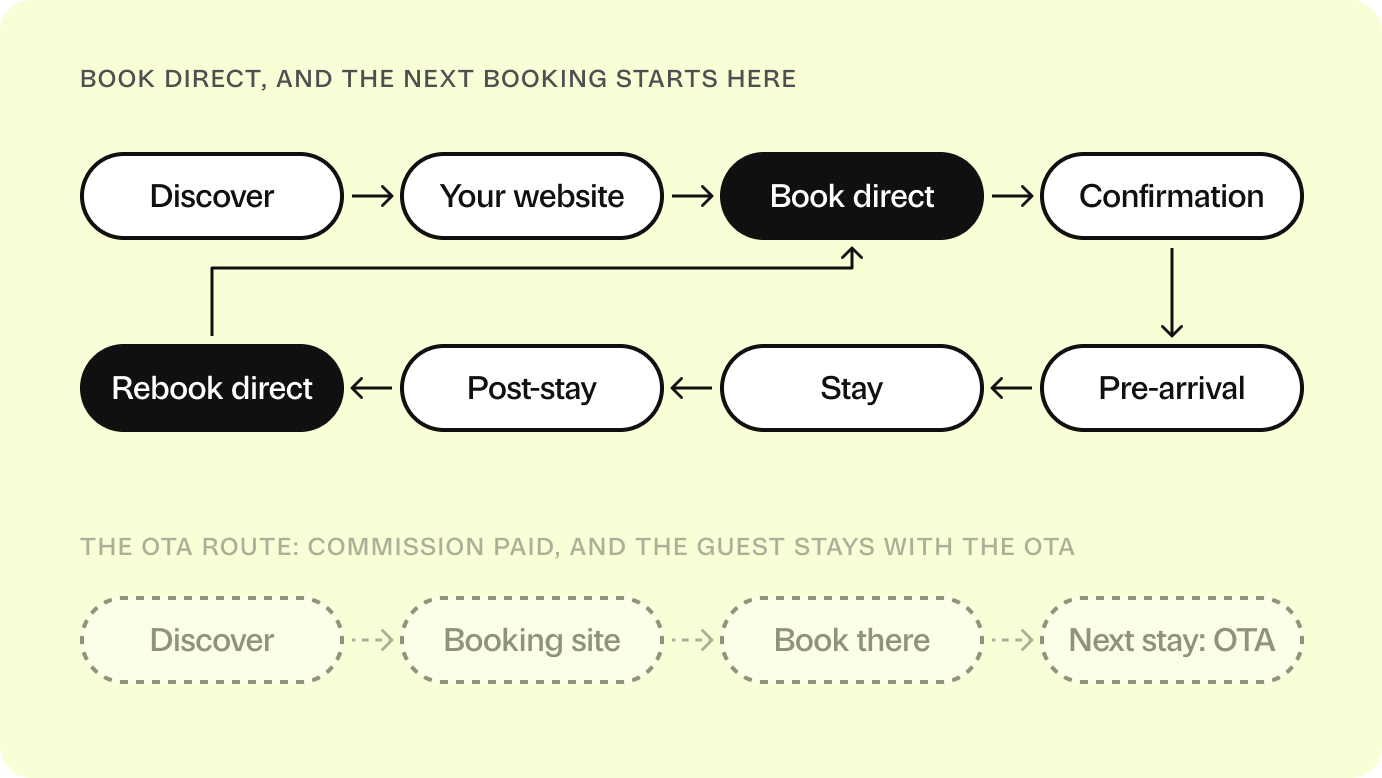
A guest who books through an OTA belongs to the OTA. A guest who books direct gives you their details, and that is where the next booking comes from. We connect the booking engine to your email platform, usually Klaviyo, so every direct booking can trigger:
- A confirmation and pre-arrival email in your brand, with the chance to add dinner, treatments or extras.
- A post-stay thank-you with a reason to come back, such as a returning guest rate or a seasonal package.
- Segments for guests who started a booking and didn’t finish, and for guests who haven’t visited in a year.
Where we’d start with you
Most booking journeys can be improved without starting again. We usually begin with a short audit of yours:
- How many taps it takes to book on a phone, from the homepage and from your most visited pages.
- Where the website hands over to the booking engine and how much of the brand survives the hand-off.
- Whether your analytics can see bookings at all, and where guests drop out.
- What a guest gets for booking direct, and whether they can see it.
- What happens after the booking, and how many guests come back direct.
If you would like us to look at your booking journey, get in touch. We will tell you where bookings are being lost and what we would change first.