


If you had asked us in January what the biggest change to websites would be this year, we would probably have said AI. We would have been right, but only partly. Between January and December 2026 almost every part of how a website is found, built, secured and measured moved on. For us at Adigi it has been the busiest year of change since we started, and it has reshaped how our team works with every client.
This is our look back at 2026: what changed across the industry, what we changed in response, and where we are heading in 2027.
AI changed how people find websites
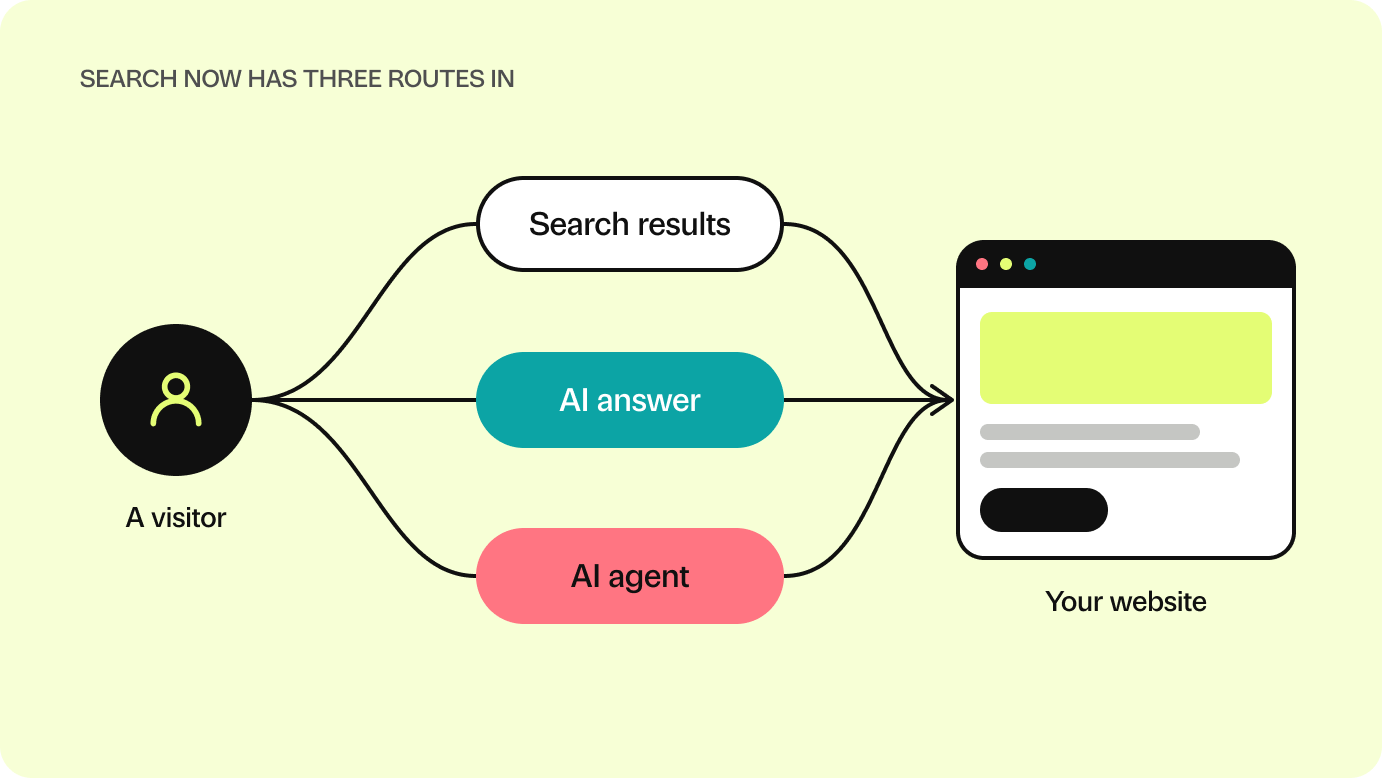
The first shift was in search itself. Similarweb now puts zero-click searches, where someone searches and never visits a website, at 68% of all Google searches, up from around 45% a decade ago. AI Overviews appear on more than a fifth of all queries, and Google said at I/O 2026 that AI Mode had passed one billion monthly users. Pew Research found people clicked a result on 8% of searches where an AI summary appeared, compared with 15% where one did not.
On top of that, AI assistants and agents now visit websites on behalf of people. Cloudflare Radar data showed ClaudeBot growing from 9% to 20% of AI crawler traffic by May 2026, with OpenAI’s GPTBot at around 10%. Google Analytics only started showing AI assistants as their own channel in 2026, and visits from AI agents rarely show up in reports at all. Yet they are often someone comparing options, checking prices or looking for availability.
For our clients this meant a change of focus. A website now has two audiences: people, and the AI tools that summarise it for people. Both need clear structure, fast pages, structured data that tells Google and AI tools what each page is about, and content that answers real questions. Search engine optimisation (SEO) has been joined by generative engine optimisation (GEO), and we now plan both into every build from the sitemap stage.
AI changed how we build websites
AI has also changed what happens inside the studio. Design, build and content tasks that used to take days can now be drafted in hours, which gives our designers and developers more time for the parts that matter most: the brand thinking, the user journey and the details that make a site convert.
It has not replaced the process. We still start with a collaborative sitemap and wireframes before any visual styling, and every site is still shaped by analytics and user data. Our designers design every site, our clients approve it, and we check every page before it goes live. What has changed is the pace. Clients see working prototypes sooner, we can test more ideas, and clients get more done in the same time.
PHP2Shell and the security wake-up call
In October, the PHP project disclosed two critical vulnerabilities, CVE-2026-109618 and CVE-2026-109619, which became known as PHP2Shell. Each carried a CVSS severity score of 9.2. In plain terms, an attacker could run code on a web server without logging in, and the attack happened before any of the website’s own code ran, so application-level security could not block it. The UK’s National Cyber Security Centre urged organisations to consider taking offline any system that could not be patched straight away.
PHP powers a huge share of the web, including WordPress, so this was not a niche issue. Our team worked through the sites we host and support with our hosting partners to make sure every one was patched and checked. It was a reminder of why managed hosting and proper ongoing support matter, and it also made us rethink our default way of building.
PHP2Shell was not an isolated event. The government’s Cyber Security Breaches Survey 2025/26 found that 43% of UK businesses and 28% of charities had experienced a cyber security breach or attack in the previous 12 months. Cyber security is no longer something that sits with IT. It is part of how a brand protects its customers and its reputation, and we expect it to play an even bigger part in 2027.

Why headless is now our default
We have built headless websites for some time, but in 2026 headless moved from a specialist option to the approach we recommend for almost every client. Following PHP2Shell, we made it our default for new builds.
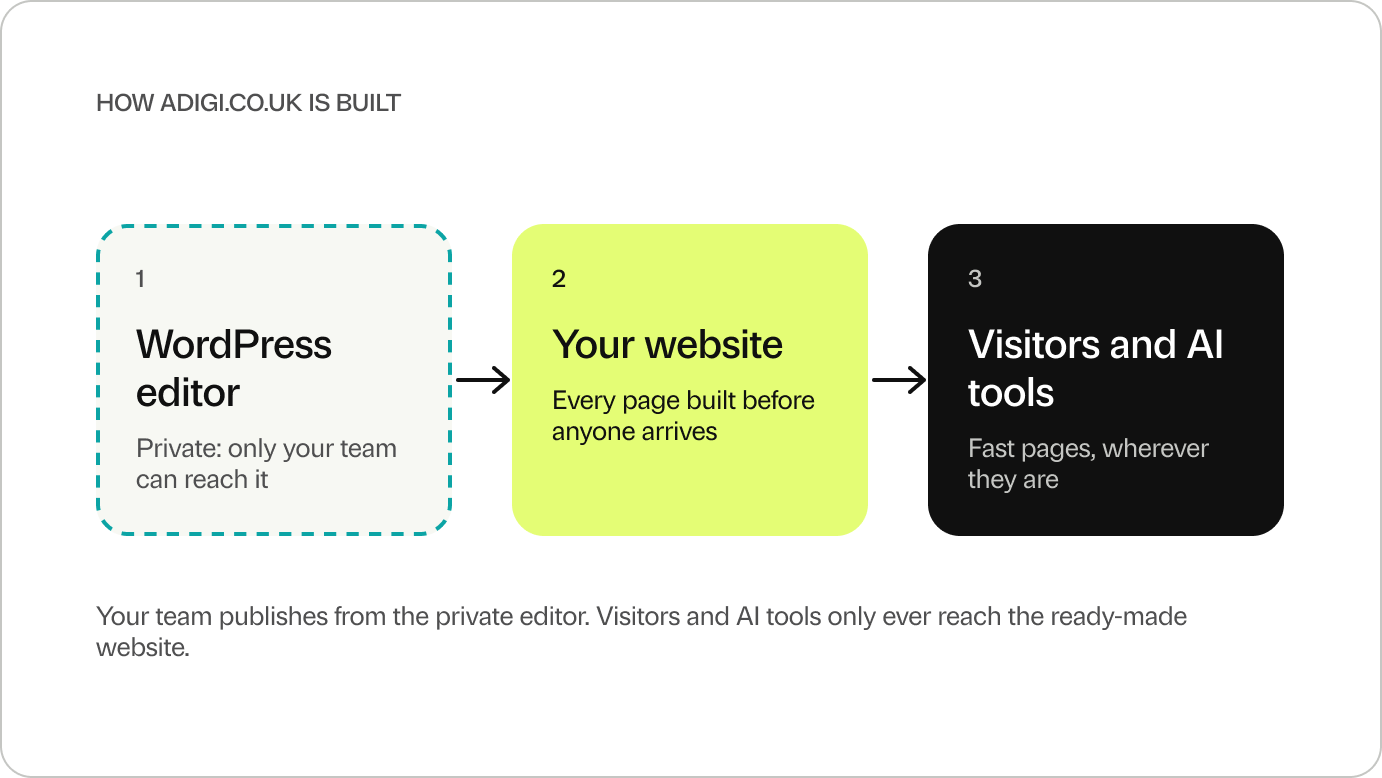
A headless website separates the front end that visitors see from the content management system (CMS) your team uses. Your team still edits in a familiar WordPress dashboard, but it is private to them. The website visitors see is built in advance and served from a fast global network, separately from it.
Once a site is rebuilt this way, the benefits are practical:
- Security: the CMS and its PHP code are no longer exposed directly to the public web, which removes a large part of the attack surface that vulnerabilities like PHP2Shell rely on.
- Speed: pages are pre-built and served from a global network, so they load quickly for people and are easy for search engines and AI tools to read.
- Flexibility: the same content can feed a website, landing pages, apps or other channels without rebuilding the back end each time.
- Control: clients keep full ownership of their content, the WordPress editor their team already knows, and every page address. We redirect any that change, so rankings carry over.
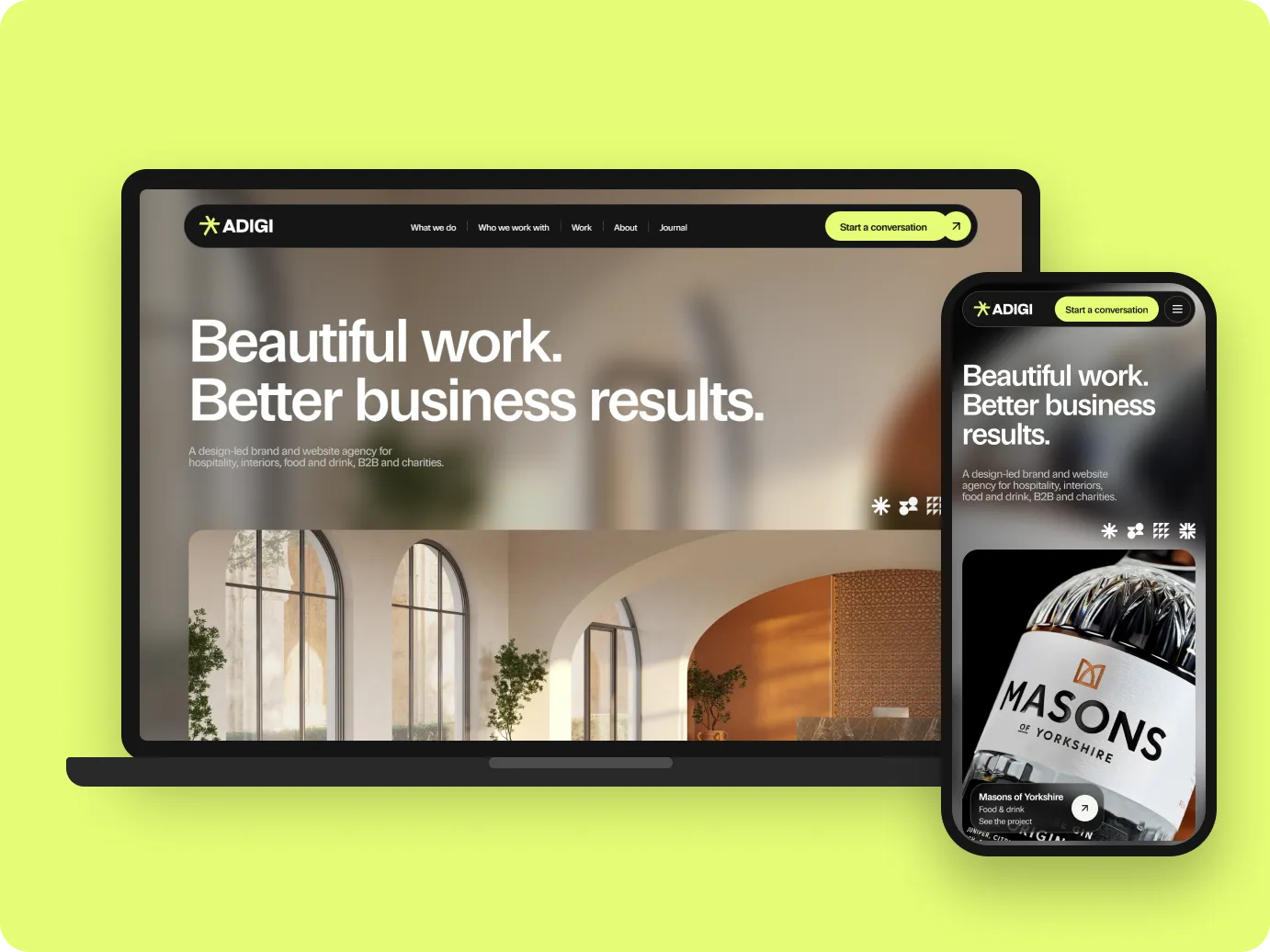
We put this to the test on our own site first. Alongside a new Adigi brand, we launched a new adigi.co.uk on 26 October, built the same way we now recommend to clients. It is faster, more secure and easier for our team to update, and it has given us a working example to show anyone considering the move.

Adigi OS: rebuilding how we run the agency
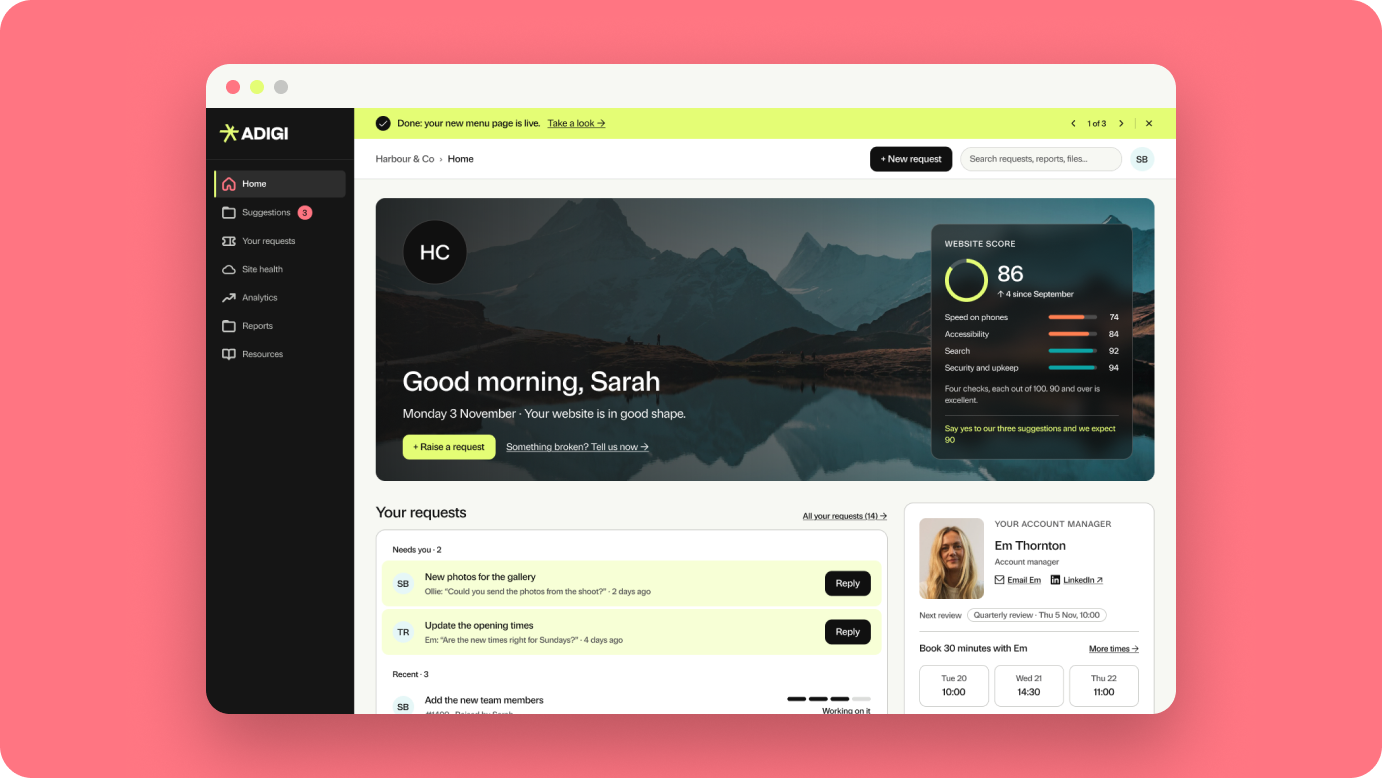
The biggest internal change this year was building our own operating system. Adigi OS was designed and built in-house by our team using AI, and from November the whole team moved onto it. It brings our projects, time tracking, client relationships, new business and reporting into one place, and it is connected to the tools we already use with clients, such as Klaviyo and Google Analytics.
For clients, the difference is responsiveness. Requests are triaged and scheduled based on who has capacity, nothing gets lost in an inbox, and we can see the full picture of an account at a glance. It also frees up time that used to go into admin, which our team now spends on work that improves results.
From launch day to long-term performance
The thread running through all of this is performance. A website launch is the start of the work, not the end. In 2026 we put much more of our attention into what happens after go-live, using reporting dashboards, tracking data, conversion data and engagement metrics to show clients exactly how their website is performing.
Because these tools now feed into Adigi OS, we can spot a drop in conversions, a slow page or an underperforming campaign sooner, and act on it. Our retainer work has shifted towards conversion rate optimisation and continuous improvement, guided by data rather than opinion. With fewer clicks coming from search, making the most of every visit matters more than ever. Visitors who do arrive from AI search tend to arrive further along in their decision, so a clear, fast and well-measured journey turns more of them into bookings, sales and enquiries.
Looking ahead to 2027
We expect 2027 to continue at the same pace. AI agents will do more of the browsing and buying, security threats will keep growing, and the gap between websites that are actively measured and improved and those that are left alone will widen. Our plans for the year are:
- Continue to build new websites headless by default, and help existing clients plan a move where it makes sense.
- Treat cyber security as part of every project and support plan, not an afterthought.
- Build every site for both people and AI, with clear content, structured data and GEO planned from the start.
- Keep developing Adigi OS and our reporting, so every client can see how their website is performing and what we are doing to improve it.
The landscape has changed a great deal since January, and our team has changed with it. What has not changed is our focus: brand-led websites that perform, and a team that keeps working to help our clients get the best results from them.
If you would like to talk about headless, website security or how your current site is performing, get in touch with the Adigi team. We would be happy to take a look.
Sources
- PHP2Shell: Datadog Security Labs
- PHP2Shell and NCSC guidance: Help Net Security, 21 October 2026, helpnetsecurity.com
- Cyber Security Breaches Survey 2025/2026: GOV.UK (DSIT)
- Zero-click search, AI Mode and AI crawler data: Similarweb, “Zero-Click Marketing: What the 2026 Data Means”
- AI summaries and click-through: Pew Research Center, July 2025